
Consumer Decision Journey in Digital Marketing
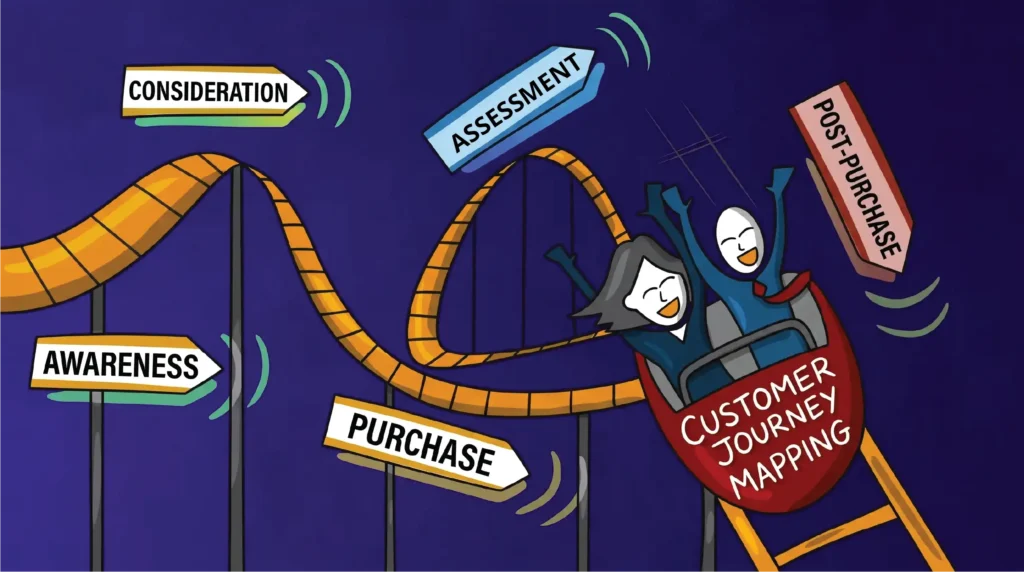
When people buy something online, the decision rarely happens after seeing a single advertisement.
A customer may first discover a brand on social media, search for more information on Google, read reviews, compare alternatives, visit the website, and return several times before finally making a purchase.
This series of interactions is known as the consumer decision journey.
For digital marketers, understanding this journey is important because consumers today have more information, more choices and more opportunities to compare brands than ever before. A brand is no longer competing only for a customer’s attention. It is competing for their trust and confidence throughout the decision-making process.
Table of Contents
- What Is the Consumer Decision Journey?
- Why the Consumer Decision Journey Matters
- The 5 Stages of the Consumer Decision Journey
- The Journey Isn’t a Straight Line
- Creating the Right Content at the Right Time
- Consumer Journey vs. Marketing Funnel
- How Can Digital Marketers Improve the Journey?
- Frequently Asked Questions
- Final Thoughts
What Is the Consumer Decision Journey?
The consumer decision journey in digital marketing is the process a person goes through from recognizing a need to researching solutions, evaluating different options, making a purchase and experiencing the product afterward.
A practical way to understand the journey is through five stages:
Awareness → Consideration → Assessment→ Purchase → Post-Purchase
But, the journey isn’t always linear. A consumer may discover a brand on Instagram, search for it on Google, compare it with another brand, leave the website and return several days later. This makes the consumer journey very different from a simple marketing funnel.
Why the Consumer Decision Journey Matters
The customer journey is frequently shown as a funnel in traditional marketing. People enter at the top, move through different stages and eventually become customers. But digital consumers don’t always behave that way.
Today, people have access to endless information. They can compare prices, read reviews, watch videos and ask other people about a product before spending money.
For example, someone looking for a new laptop might:
See a video → Search Google → Read reviews → Visit a website → Compare brands → Watch another video → Purchase
The brand may influence the consumer at several different points—not just at the moment of purchase.
That’s why digital marketers need to understand the whole decision journey, rather than focusing only on conversions.
The 5 Stages of the Consumer Decision Journey
1. Awareness: Recognizing a Need
The journey often begins when a person becomes aware of a problem, need or desire.
It could be something as simple as:
“My laptop is getting too slow. I need a new one.”
The consumer might not have a specific brand in mind at this point. They are simply beginning to look for a solution. Brands can become visible during this stage through:
- Social media content
- Search engines
- Blog articles
- Videos
- Digital advertising
- Educational content
The objective isn’t always to make an immediate sale. It is to be present when the customer starts looking for answers.
2. Consideration: Exploring the Options
Once a customer understands what they need, they begin exploring possible solutions.
They may search for:
“Best laptops for graphic designers”
or
“Best laptops under AED 4,000.”
At this point, customers are looking for useful information. They want to understand their options before committing to a particular product or brand.
This is where educational resources can really help. Helpful articles, buying guides, videos, product explanations and social media content can answer customer questions while gradually building familiarity and trust. Instead of simply telling people what to buy, brands can help them understand what is right for them.
3. Evaluation: Comparing Options
Once customers have narrowed their choices, they begin comparing.
They may consider:
- Price
- Features
- Reviews
- Testimonials
- Brand reputation
- Customer service
- Website experience
At this stage, trust becomes critical.
Even a great product can lose a customer if the website feels unreliable, information is unclear or important questions remain unanswered. Good digital marketing doesn’t just attract attention.
It reduces uncertainty.
4. Purchase: Making the Decision
After researching and comparing, the customer is ready to buy.
But the experience can still influence the decision.
A complicated checkout, unexpected costs, limited payment options or a slow website can cause customers to abandon their purchase.
The buying experience should therefore be:
Clear + Simple + Convenient + Trustworthy
When customers are ready to buy, the digital experience should make the decision easier, not harder.
5. Post-Purchase: What Happens After the Sale?
The journey doesn’t end after payment.
Customers still evaluate their experience:
Did the product meet my expectations?
Was the service good?
Did the brand deliver what it promised?
A positive experience can lead to repeat purchases, recommendations and positive reviews. A poor experience can send customers to competitors.
That’s why the post-purchase experience is an important part of digital marketing.
The Journey Isn't a Straight Line
A customer’s journey might look like:
Instagram → Google → Website → Reviews → Competitor → YouTube → Website → Purchase
Another customer might discover a brand through Google and purchase immediately. Someone else may take weeks or months to decide. Customers switch between channels, evaluate options, and return to brands at various times.
That’s why businesses need to create consistent and useful experiences across multiple touchpoints.
Creating the Right Content at the Right Time
Different stages require different types of content.
Stage | Customer Need | Useful Content |
Awareness | Understand the problem | Blogs, videos, social posts |
Consideration | Explore solutions | Guides, articles, educational content |
Evaluation | Compare options | Reviews, comparisons, testimonials |
Purchase | Make a decision | Product pages, offers, clear CTAs |
Post-Purchase | Get value | Tutorials, support, follow-up content |
The key is simple:
Create content around what the customer needs, not just what the brand wants to say.
Consumer Journey vs. Marketing Funnel
The marketing funnel is useful for campaign planning, but the consumer decision journey gives us a more realistic view of how people behave online.
Marketing Funnel | Consumer Decision Journey |
Often linear | Often non-linear |
Focuses on conversion | Focuses on the complete experience |
Marketer-focused | Customer-focused |
Purchase is often the end | Post-purchase is part of the journey |
The difference comes down to perspective.
The funnel asks: “How do we move people toward conversion?”
The consumer journey asks: “What does the customer need to make a confident decision?”
How Can Digital Marketers Improve the Journey?
- Understand customer questions : Find out what people search for, worry about and compare before purchasing.
- Create content for every stage : Help customers discover, understand, compare and decide.
- Build trust : Use reviews, testimonials, case studies and clear information to reduce uncertainty.
- Remove friction : Make websites easy to navigate and purchases simple to complete.
- Look beyond the conversion : Understand which content and interactions influenced the final decision.
Frequently Asked Questions
1. What is the consumer decision journey?
It is the process customers go through when identifying a need, researching soultions, evaluating options, purchasingand experiencing a product or service.
2. What are the five stages?
Awareness, consideration, evaluation, purchase and post-purchase
3. Is the journey linear?
No. Customers can move between stages, compare alternatives and revisit brands before making a decision.
4. Why is it important?
It helps marketers understand customer needs and create more relevant content and digital experiences.
Final Thoughts
A customer’s decision is rarely influenced by one advertisement. It is often the result of several small interactions, a useful article, a good review, a clear product page or a trustworthy website.
That’s why effective digital marketing is about more than getting attention. It’s about being useful at the right moment. When marketers understand the consumer decision journey, the question changes from:
“How can we get people to buy?”
to:
“What does this person need to feel confident about their decision?”
Because great digital marketing doesn’t simply push people toward a purchase.
It helps them make the decision